Here is what data reveals about health conditions of women in south Kashmir’s Anantnag district regarding pregnancy and postpartum issues

Sameer Ahmad
Anantnag,23 August: ASHA worker, Lal Jan 45 has helped deliver at least 500 babies since she was appointed as a health worker in Hapatnard Gogaldar village in Anantnag district.
Lal Jan was appointed in 2005 in the health department as ASHA worker. Prior to her appointment, she assisted with at least 250 deliveries. Lal Jan’s mother, Zaina Begam, did the same job and has helped out with at least 700 deliveries at their homes when no health facilities were available.
Lal Jan told Arising state, “I have learned a lot from my mother, who was well known in the area for helping pregnant women deliver at home.”. Her mother died 30 years ago, she said.
In addition to her delivery experience, Laljan also raises awareness about family planning from house to house.

For her performance character and conduct during the 2007-2008 and 2009 period, she won an appreciation award from the office of block medical officer Bijbehara for the motivation she gave to a number of beneficiaries for family planning and female sterilization.
According to her, at least 300 women have done sterilizations in the Hapatnard area and nearby villages after giving birth to their third, fourth and even sixth and seventh children.
The Hapatnard village which is located on the foothills of Khovripora block is about 35 kms from the District headquarter Anantnag.
The first Primary Health Center was established in the village in 2008 that became operational in 2018, before the establishment of the PHC, the patients of the area visited either the Seer sub-district hospital or the MCCH hospital at Anantnag.
There are eight villages around Hapatnard village where the PHC provides healthcare for about seven thousand people. As the hospital lacks basic facilities including X-rays and diagnostic testing, patients are forced to visit the Seer Sub District Hospital or MCCH Hospital Anantnag.
The lack of a gynecologist in the area also severely limits pregnancy care and causes severe hardships for women in the area.
As per official data provided by the chief medical officer Anantnag, more women have opted for sterilization in Anantnag District than men. During this period, 1369 women have been operated for various methods of permanent birth control, including laparoscopic sterilization and mini-laparotomy, while only one man has undergone permanent sterilization.
A total of 3144 spontaneous miscarriages have been reported in District Anantnag since 2019 to date, according to data.
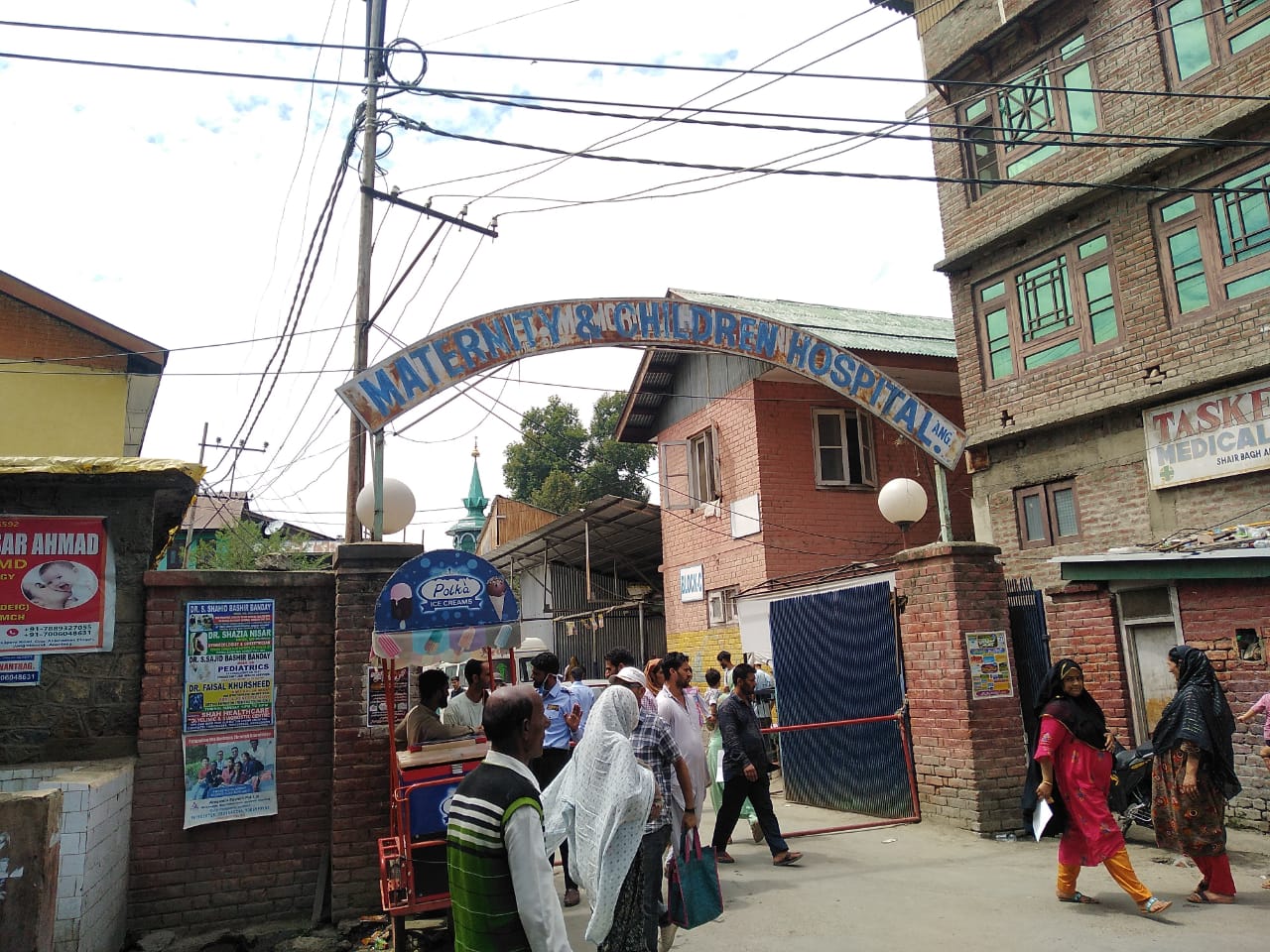
The only maternity and child care hospital in Anantnag district, which serves the entire south Kashmir region, as well as Chenab and Pir-Panchal Valleys, has also provided Daily Arising with the data, which indicates that 913 women have been surgically sterilized or microlaparotomized for permanent birth control methods in hospitals since 2019 till date.
The hospital is presently housed in an old, dilapidated and unsafe building in the congested Sherbagh locality of the old town in the Anantnag district.
The 40-bedded hospital gets an average of 40,000 patients in the Out-Patient Department (OPD) and about 7000 indoor patients every month.
According to official sources, the ratio will be high in South Kashmir as most of the patients preferred to do Sterilisation and miscarriages in private hospitals.
Dr. Nawaz HOD Gynecology in MCCH hospital Anantnag while talking to Daily Arising state said that Female sterilization is the most preferred family planning choice here in south Kashmir’s Anantnag district. Every year, hundreds of women undergo sterilization procedures for permanent birth control. Lack of awareness and misconceptions about family planning are the main reasons for poor uptake in the Anantnag district, both among urban and rural populations. Religious and cultural beliefs are also factors that contribute to the problem. Vasectomy is generally not performed by men for sterilization since they believe it affects their manhood, he explained.
Anemia is another problem in rural areas. According to a study conducted by the Department of Obstetrics and Gynecology GMC Anantnag, almost 83% of pregnant and lactating women in South Kashmir were anemic due to poor nutrition.
Anemia can lead to multiple complications during pregnancy, labour and the postpartum period, which include fetal growth restriction, abruption of the placenta, cardiac failure, and even death of mother and baby, Nawaz says. Women don’t take the recommended iron and folic acid supplementation in adolescence and pregnancy. Short birth intervals and multiparity further add to the problem.
In rural areas, ASHA workers and primary care physicians should be involved in addressing this problem. Focusing on adolescent health, preconceptional care and counseling, good nutrition, education, and awareness can significantly reduce the problem, he continued. This part of the world also fails to adequately address the emotional and mental well-being of pregnant women. Among the few responsible factors are poor social support and bad pregnancy experiences.
‘In south Kashmir, I see several women in hospitals who are suffering from mental health issues during their pregnancies, especially those who have had a negative experience in the past, such as a miscarriage.’
The fact that women don’t tend to seek help for mental diseases further contributes to the burden of mental diseases. It is possible to mitigate the problem with good social support and timely intervention, he went on to say.



2 Overground Workers Arrested In J&K’s Baramulla; IEDs, Arms Seized
SRINAGAR, Oct 22: Security forces arrested two overground workers of terrorists and recove…

2 Overground Workers Arrested In J&K’s Baramulla; IEDs, Arms Seized
SRINAGAR, Oct 22: Security forces arrested two overground workers of terrorists and recovered arms …