Union Budget 2026–27 Spurs Passenger-Centric Railway Modernisation and High-Speed Connectivity

New Delhi, Feb 3: The Union Budget 2026–27 has given a major push to railway modernisation and regional connectivity, positioning railways as a central pillar of passenger-centric growth, enhanced safety, and all-round economic development across states.
According to the Ministry of Railways, record state-wise allocations in the budget focus on high-speed rail corridors, network expansion, 100 per cent electrification, station redevelopment, and dedicated freight infrastructure, aimed at improving passenger convenience and strengthening logistics efficiency nationwide.
High-Speed Rail Corridors
Several high-speed rail corridors have been proposed to significantly reduce travel time between major economic, cultural, and tourism hubs. These include:
-
Delhi–Varanasi: ~3 hours 50 minutes
-
Varanasi–Siliguri: ~2 hours 55 minutes
-
Chennai–Bengaluru: ~1 hour 13 minutes
-
Mumbai–Pune: ~48 minutes
Officials said these corridors will create new economic belts, improve inter-regional mobility, and boost tourism and trade across northern, eastern, western, and southern India.
Southern & Western India Connectivity
In southern India, the proposed high-speed rail “diamond” connecting Hyderabad, Bengaluru, Chennai, and adjoining cities is expected to compress travel times and support IT, manufacturing, and services corridors. Bengaluru is set to emerge as a central mobility hub, facilitating faster business travel and talent movement.
In Maharashtra, budgetary support is focused on the Mumbai–Pune high-speed corridor, capacity augmentation of congested routes, station modernisation, and suburban rail upgrades to meet rising passenger and freight demand.
Himalayan & Border Regions
Rail expansion in Himalayan and border regions aims to ensure all-weather connectivity and support tourism and pilgrimage.
-
Rishikesh–Karnaprayag rail line in Uttarakhand will improve access to remote areas through complex tunnelling works.
-
Himachal Pradesh will see network expansion, electrification, and modernisation in hilly terrain.
-
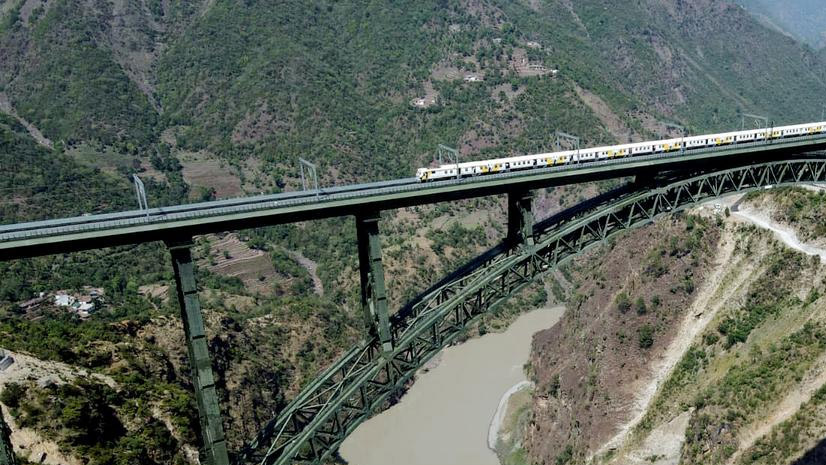
In Jammu & Kashmir, strengthened rail links and proposed extensions toward Uri are expected to ensure year-round connectivity despite winter disruptions.
North-East Connectivity
A key strategic project outlined in the budget is a planned 40-km underground rail corridor to strengthen connectivity between the North-East and the rest of India. The project also includes four-line expansion of existing tracks to ensure uninterrupted and resilient passenger and freight movement through this critical corridor.
Freight & Logistics Push
Freight efficiency will be strengthened through the East–West Dedicated Freight Corridor from Dankuni (West Bengal) to Surat (Gujarat), passing through Jharkhand, Bihar, Odisha, and Maharashtra. The corridor is expected to decongest passenger lines, reduce logistics costs, and support industrial growth.
Passenger Experience & Safety
Several states, including Punjab, Haryana, and Himachal Pradesh, have achieved 100 per cent electrification and are upgrading stations under the Amrit Bharat Station Scheme, enhancing passenger amenities, sustainability, and safety.
For passengers, the budget promises:
-
Shorter travel times
-
Modernised stations
-
Reduced overcrowding
-
Improved last-mile connectivity
For freight, Indian Railways aims to achieve 3,000 million tonnes of loading in the long term through dedicated corridors, upgraded tracks, advanced signalling, and modern locomotives.
Officials said the enhanced capital investment across states will generate employment, boost regional economies, and accelerate the vision of Viksit Bharat, with detailed planning and execution to follow.(PIB)
PRESIDENT OF INDIA GRACES INTERNATIONAL WOMEN’S DAY CELEBRATIONS IN NEW DELHI
TO ACHIEVE DEVELOPMENT IN THE TRUE SENSE, WE MUST ENSURE EQUAL PARTICIPATION OF WOMEN, WHO…
PRESIDENT OF INDIA GRACES INTERNATIONAL WOMEN’S DAY CELEBRATIONS IN NEW DELHI
TO ACHIEVE DEVELOPMENT IN THE TRUE SENSE, WE MUST ENSURE EQUAL PARTICIPATION OF WOMEN, …